

Dev log · · v0.56.0
Under power, at the dock, at anchor: an engine lever, dock lines and a real anchor
Three smaller updates for the times you are not sailing: an engine lever on the HUD that shows the gear and the throttle, real dock lines when you tie up, and an anchor you can watch go down and come back up.
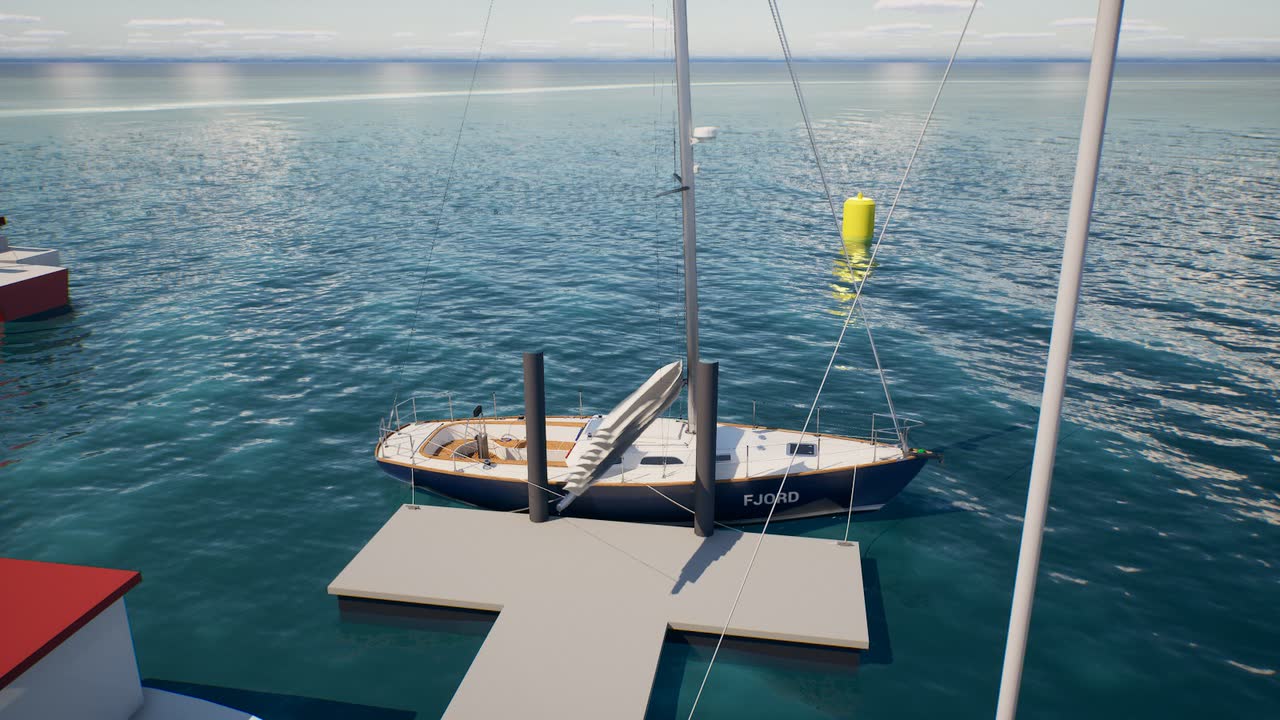
A good part of a day on the water happens away from the sails: motoring out of the marina, tying up at the dock, lying at anchor. Versions 0.53.0 to 0.56.0 make those moments look the way they work.
| Key | What it does |
|---|---|
| E | engine start / stop |
| Up / Down | throttle ahead / astern |
| L | tie up to a dock / cast off |
| K | drop / weigh anchor |
The engine lever (0.53.0)
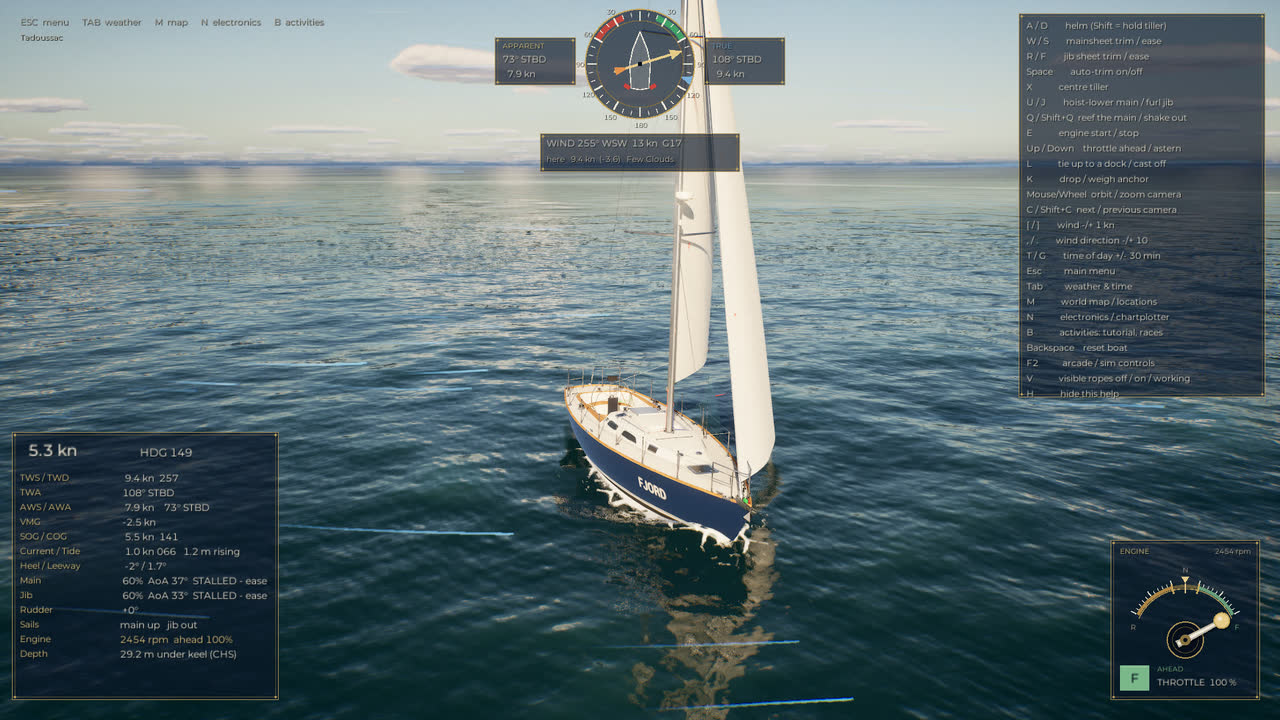
While the engine runs, a single-lever engine control sits at the bottom right of the HUD. Start the engine with E and it fades in. Stop it and it fades out.
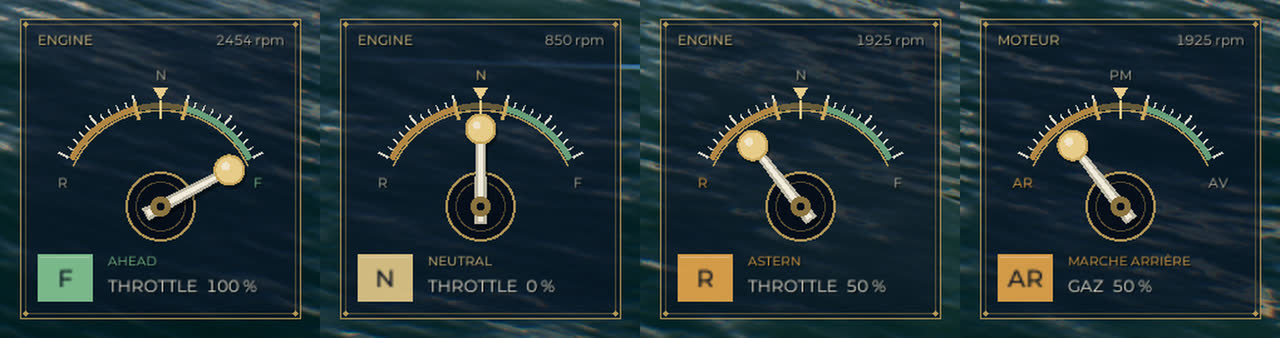
- It moves like a real lever. It is seen from the side, with the bow to the right. It stands upright in neutral, leans forward for ahead and back for astern.
- Gear first, then throttle. As on a real control, the first 14 degrees either side of neutral only put the engine in gear, at idle. The throttle opens over the rest of the travel.
- Scales and marks: a notch at neutral, a heavier mark where each gear engages, a green scale for ahead and an amber one for astern, with a tick every 10%.
- The numbers: the gear in a lit plate (F, N, R; AV, PM, AR in French), the word AHEAD, NEUTRAL or ASTERN, the throttle in percent and the rpm.
Up and Down move the throttle a tenth at a time, so ten presses take you from neutral to full ahead. The lever shows the engine’s real setting, so the keys, a gamepad and a joystick throttle all move it the same way.
Dock lines (0.54.0)
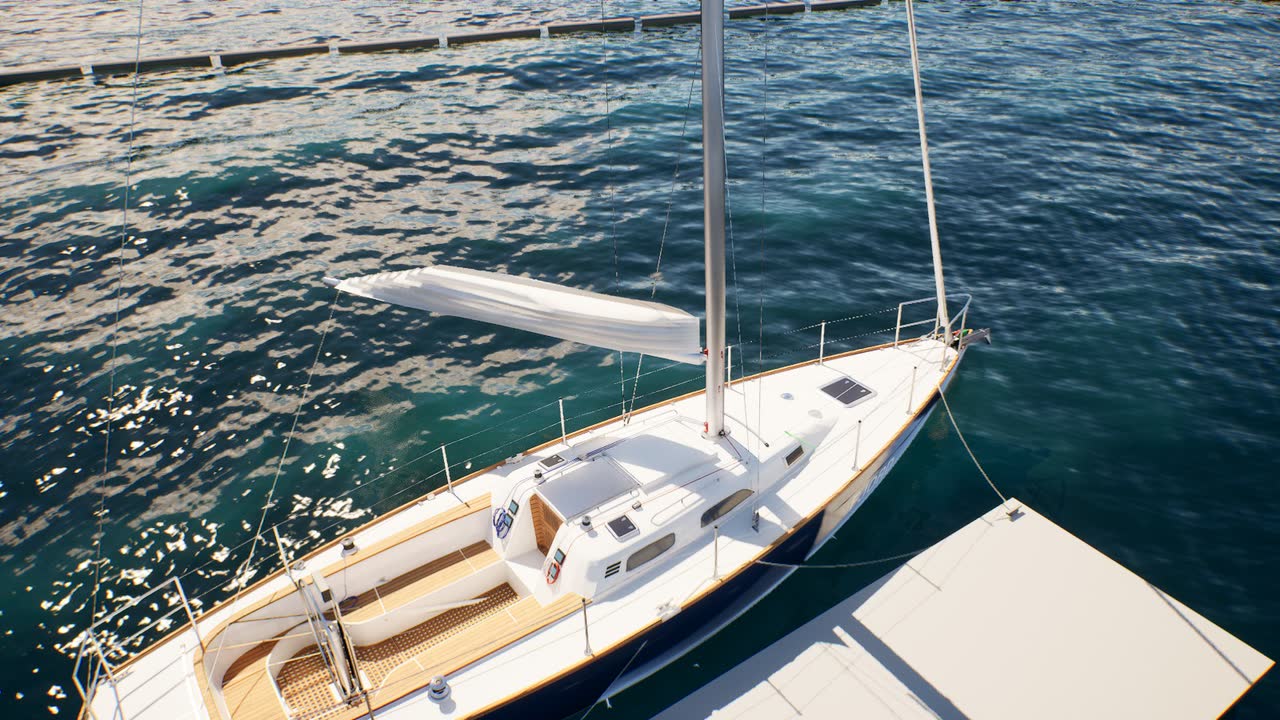
When you tie up with L, the boat is now held by lines you can see: a bow line, a stern line and, when the berth is long enough, two springs from the midship cleat. The picture at the top of this post shows the boat tied up at a T-head of the Tadoussac marina.
- Each line runs from the boat’s cleat on the dock side, over the toe rail, to a small galvanised cleat on the dock. Lines that land close together share one cleat.
- The rope is the off-white, three-strand 16 mm line of the running rigging.
- Each line keeps the length it had when it was made fast. It hangs in a slight curve that tightens and slackens as the boat and the floating dock move on the water, and it never dips into the water.
- The floating docks ride up and down with the tide. At the fixed ferry quay, the lines rise to its deck, 4.6 m up.
- Cast off with L again and the lines are gone.
The anchor (0.56.0)
Letting go. Press K and the anchor slides forward off the bow roller, tips over it and drops. It hits the water with a splash and a ring of foam, then sinks with the chain running out behind it. Once it is on the bottom, the chain pays out to five times the depth while the boat falls back on it, and the anchor digs in when the chain comes tight.
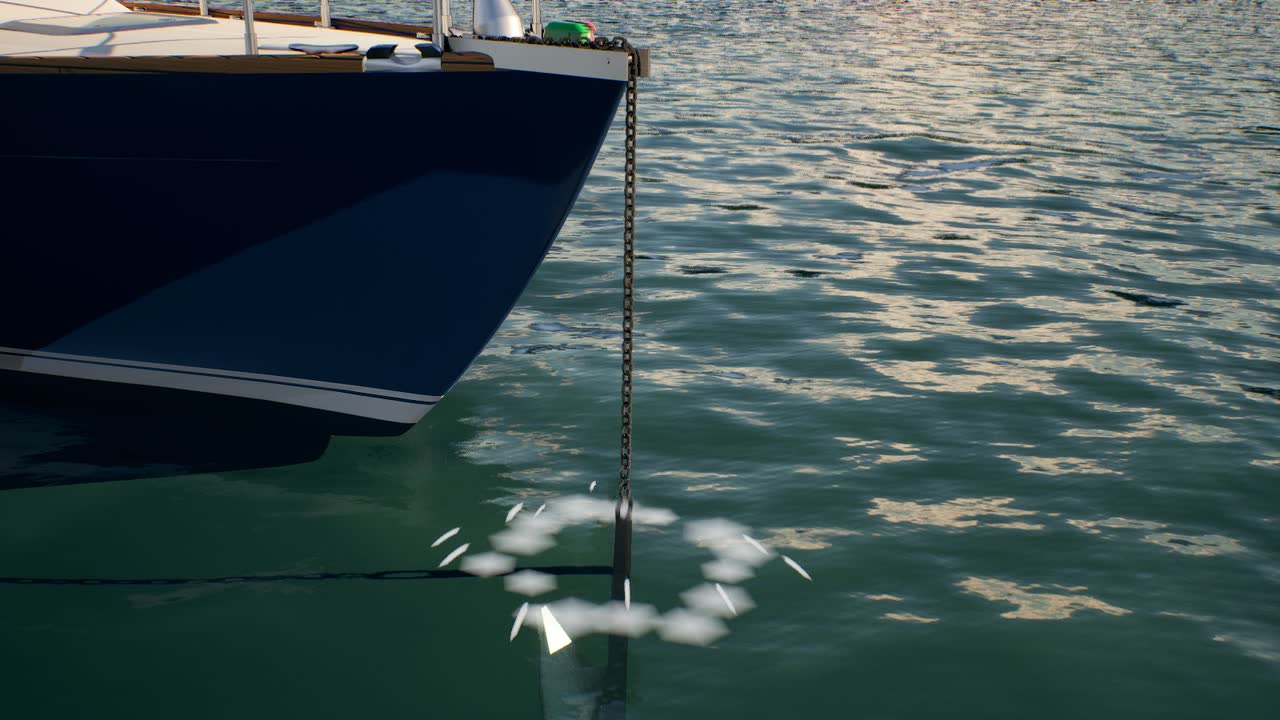
At anchor. The chain runs from the deck over the roller and hangs into the water in a curve towards the anchor, and it follows the boat as she swings. Close to the boat it is drawn as 10 mm galvanised links. In 9 m of water, with 48 m of chain out and 9 knots of wind, she lies 38 m back from her anchor.
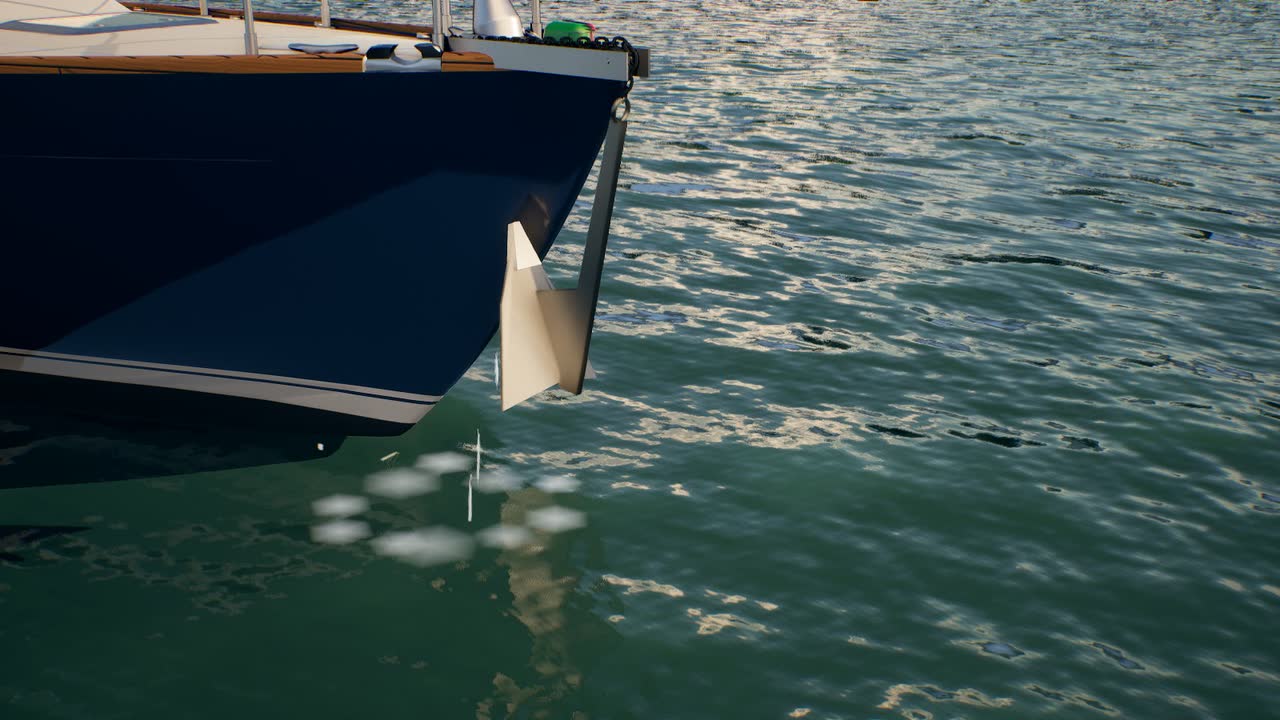
Weighing. Press K again and the windlass brings the chain in at about 33 m a minute, slower when it is under load. It pulls the boat up to her anchor at about one knot, so you no longer have to motor up to it first. The anchor breaks out when the chain is straight up and down, comes up under the bow with water streaming off it, and is drawn over the roller back into its place. Press K while weighing and the chain runs back out.
There is no sound for the chain or the splash yet.