

Dev log · · v0.45.2
New whales: belugas, minkes and fin whales
The whales at the mouth of the Saguenay are new: a beluga, a minke and a fin whale, each built from the real animal's proportions, surfacing where they really feed, with their own kind of blow. MOBYDICK now throws up a proper wall of spray.
The whales in Fjord used to be simple shapes that rolled through the surface. In version 0.45 they are new models of the three species you meet around Tadoussac, and they behave more like the real animals.
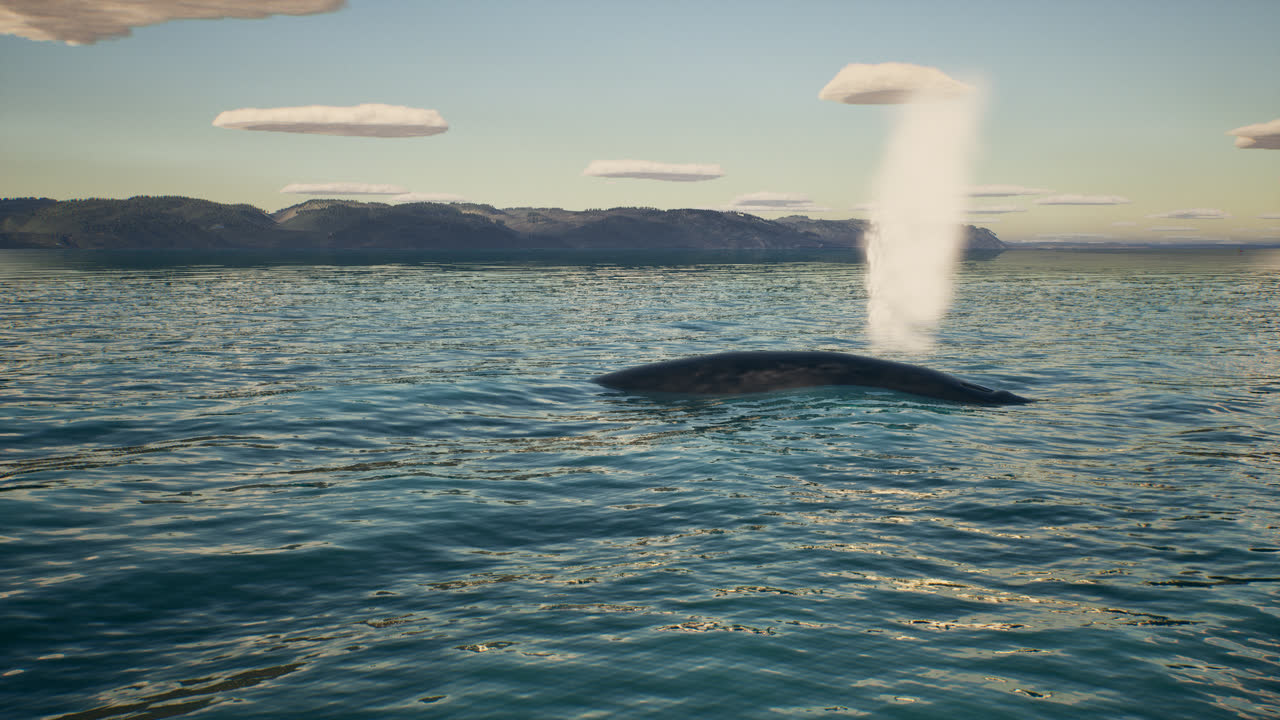
Three species, real proportions
- Fin whale, about 20 m long. It is dark on top and has the species’ uneven jaw: white on the right side, dark on the left. It also has a pale chevron behind the head and a small, swept-back dorsal fin set far down the back.
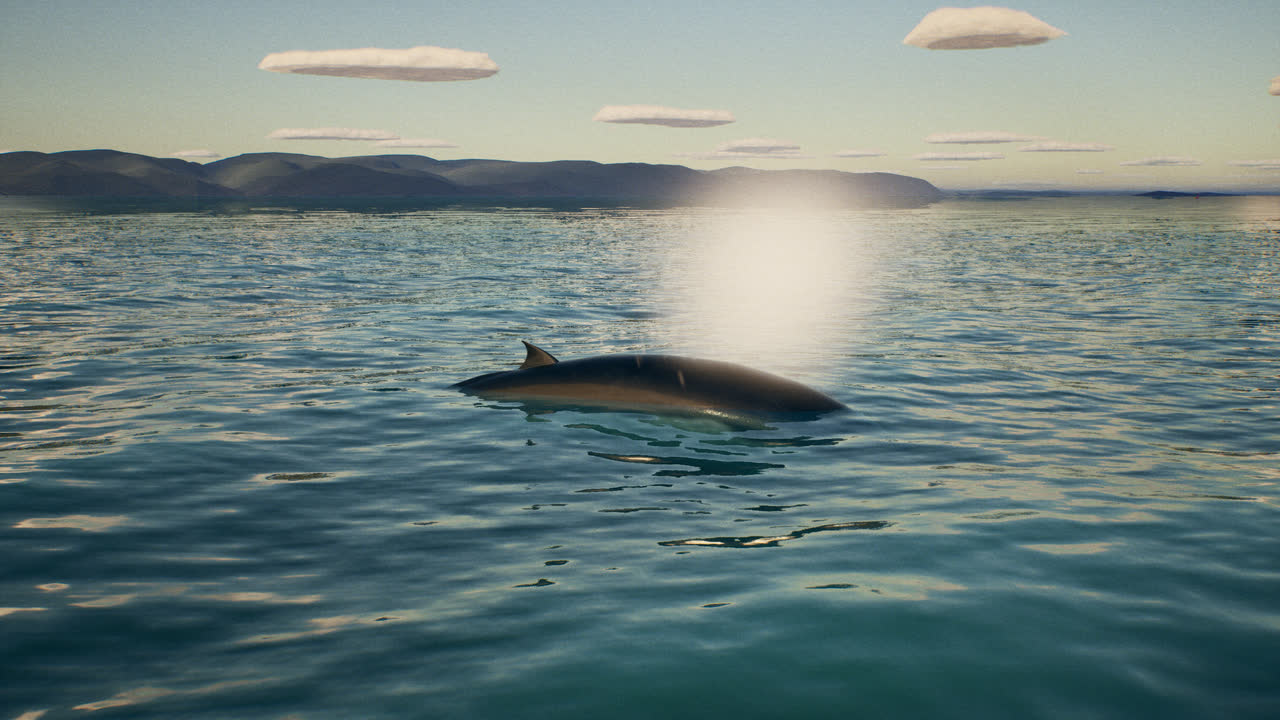
- Minke whale, about 8 m. It has a pointed head and a white band across each flipper.
- Beluga, about 4 m. It has a round melon, a neck crease and a low ridge instead of a dorsal fin. Pods have grey juveniles, which are smaller than the white adults.
Each body is built from published measurements of the real animal, not from a bought model. The details are there: blowholes, eyes, throat grooves, scars and the yellowing on an old beluga’s back.
Where they are
They live where they do in the real fjord. Belugas are there all year at the mouth of the Saguenay, in Baie Sainte-Marguerite and along the edge of the Batture aux Alouettes. Minke and fin whales come in summer and feed at the head of the Laurentian Channel off Tadoussac, where the deep cold water comes up.
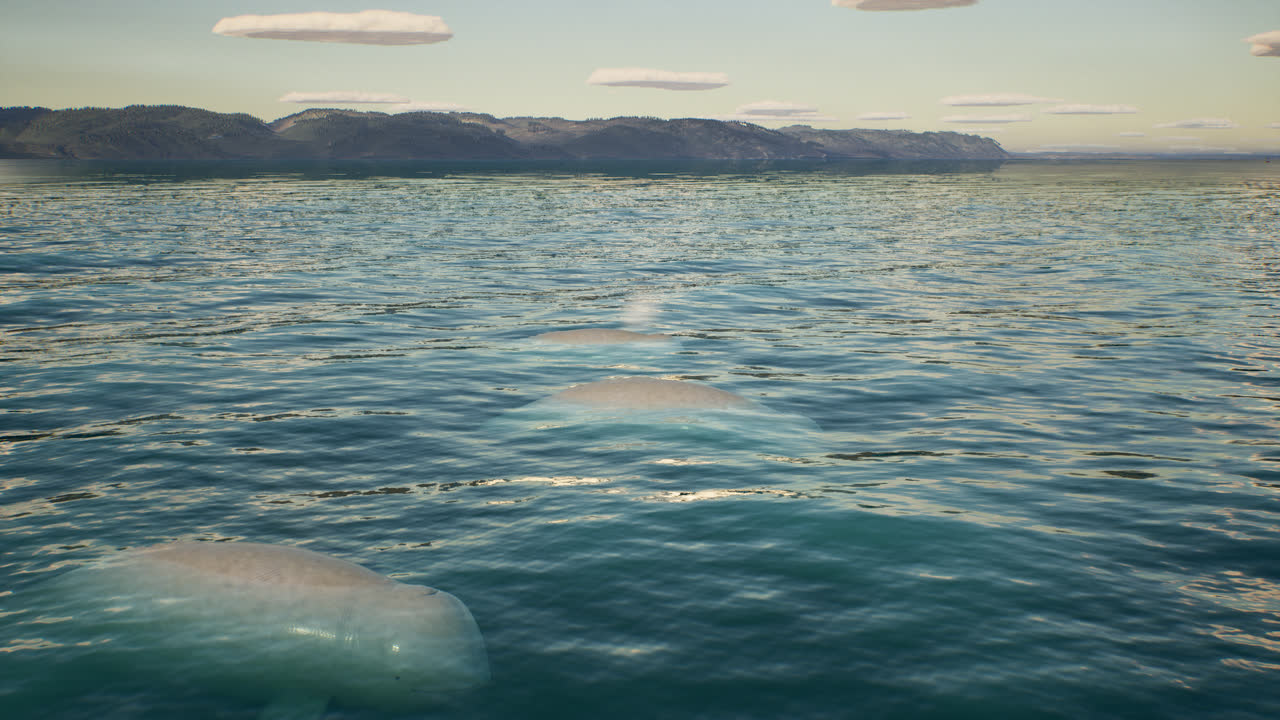
How they surface
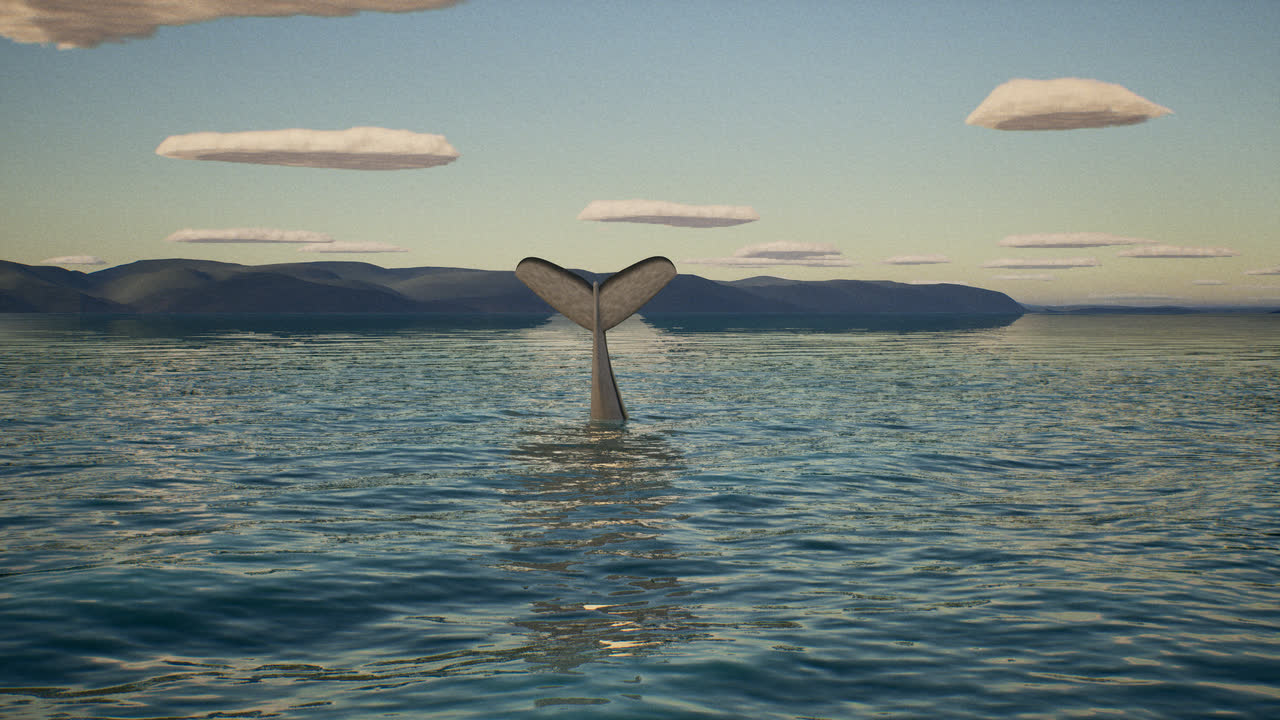
A whale comes up head first. The blowholes clear the water and it blows, then the back and the dorsal fin roll through, then the tail stock. Belugas in a pod roll together, and a beluga often turns a little on its side as it rolls. Fin whales seldom show their tails, but on about one deep dive in three, a fin whale lifts its flukes clear of the water before it goes down.
The right blow for each species
Each species has its own blow. It rises fast, spreads, drifts downwind and fades in two or three seconds, and it glows when the sun is behind it.
- A fin whale sends up a tall, narrow column of about 6 m.
- A minke’s blow is a faint, bushy puff that you often miss.
- A beluga’s blow is barely visible.
MOBYDICK
The white whale of the MOBYDICK cheat code uses the new fin whale model, painted white. It beats its tail under water, leaps ahead of your bow with its back arched and its flippers out, and falls back in. On re-entry, a curtain of water is thrown up both flanks with a column at the point of impact. The water falls back as droplets, and a patch of foam is left on the swell. Type the code while you sail, and type it again for another leap.
The whales cost little to draw: about half a millisecond of graphics time with seven of them in view. Only the whales at the surface are drawn.